

Choosing a school can feel strangely difficult. On paper, many schools promise good marks, discipline, and a safe campus. But when parents look closer, they usually want something quieter and deeper. They want to know how a child will grow there. That is often where top international schools in Kompally begin to feel different. It is not always about grand buildings or fancy labels. It is more about how learning is shaped every day, and how children are treated while they learn. When people search for international school Kompally Hyderabad features benefits, they are often trying to understand that difference in real life, not in brochures.
Learning Beyond Memorising
Regular schools can sometimes become heavily exam-focused. That works for some children, but not for all. Many students learn to remember answers before they learn to question them. International-style schools usually try to widen that approach. They bring projects, discussions, presentations, experiments, and practical learning into the classroom.
A lesson is not only about finishing a chapter. It is also about understanding why it matters. At GVK International School, we believe every child carries a different potential, like a seed waiting for the right care. That is why we focus on nurturing and cooperation before competition. Learning should build confidence, not fear.
A Curriculum With Wider Exposure
Parents often compare syllabi without real clarity. The real question is whether the curriculum prepares students for a changing world. Many top schools now combine strong Indian academic foundations with broader methods of teaching. This gives students discipline and flexibility together. That balance matters more than people sometimes realise.
At GVK International School, we follow CBSE while integrating global best practices, with future plans for IB pathways as well. This gives students access to an international curriculum Kompally families increasingly look for, while still staying grounded in familiar academic standards. It is not about replacing one system with another. It is about using what works best from more than one.
The Environment Shapes The Child Too
Children notice spaces more than adults think they do. A cramped room, constant noise, and rushed routines affect them quietly. That is why campuses matter. Open spaces, greenery, natural light, safe design, and calm surroundings can change how children feel about school.
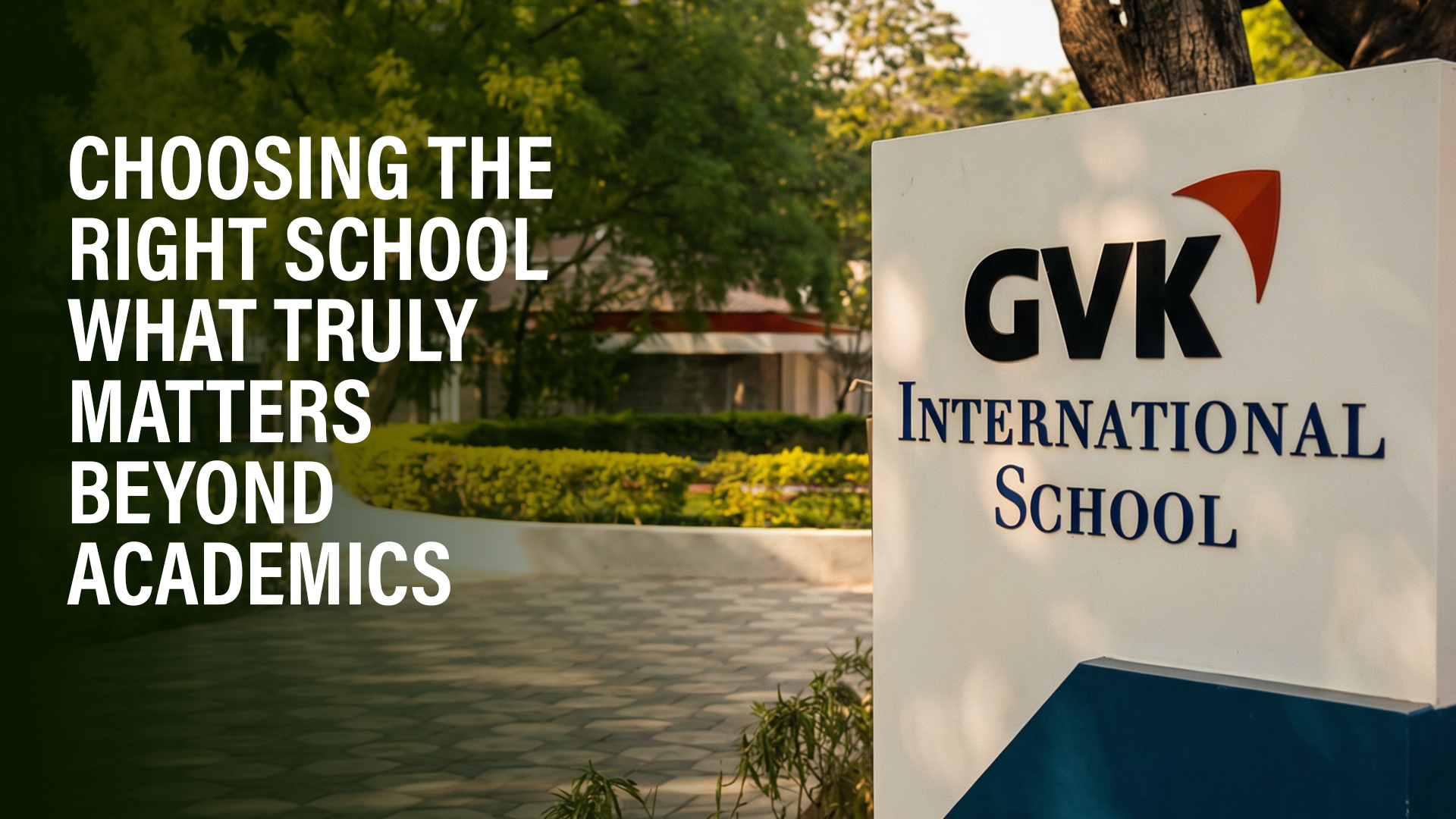
At GVK International School, we built a biophilic campus where students walk through gardens, trees, and peaceful outdoor spaces before classes begin. It may sound like a small detail, but a calm child often learns better than a stressed child. This is one reason many parents see real advantages international school vs regular school when they visit campuses in person.
Activities Are Not Extras
Some schools still treat arts, sports, and clubs as side items. They happen after “real learning” is done. But children do not grow in separate compartments. A child who struggles in maths may shine in music. A shy child may find a voice in theatre. A restless child may become steady through sport. That is why extracurricular activities international school settings usually receive more attention. They are seen as part of development, not decoration.
At GVK International School, students explore robotics, astronomy, STEAM, nature studies, culinary skills, arts, dance, drama, heritage clubs, and social responsibility programs. Sports also build resilience, teamwork, and discipline in ways textbooks cannot. Sometimes a child discovers identity in a club long before marksheets show anything.
Teachers Who Guide, Not Only Instruct
A classroom changes completely depending on the teacher. Even the same syllabus can feel alive or lifeless. Good international schools often invest in teacher training, communication skills, and student engagement methods. Teachers are expected to guide curiosity, not simply complete portions.
At GVK International School, we see teaching as a passion. Our faculty works to notice talent, support self-learning, and create respect inside the classroom. Children usually remember how a teacher made them feel long after they forget chapters.
Readiness For A Bigger World
Many families now think beyond school years. They wonder whether children can adapt later to colleges, careers, and unfamiliar environments. That readiness comes from communication skills, confidence, collaboration, research habits, and comfort with different perspectives.
A strong global learning environment CBSE model can offer exactly that balance. Students stay connected to Indian academics while developing skills valued worldwide. At GVK International School, career guidance and counselling are part of that journey. Students are helped to understand interests, strengths, and future possibilities instead of being pushed blindly into standard paths.
Why GVK International School Feels Different
At GVK International School, we have shaped learning around the child, not around rigid systems. Our biophilic campus, smart classrooms, advanced labs, strong CBSE foundation, and global teaching practices create a balanced space for growth. We encourage curiosity through robotics, arts, sports, clubs, and hands-on experiences that make learning meaningful.
Our teachers guide students with care, helping them become confident and thoughtful learners. Safe transport, counselling support, and modern facilities add everyday comfort for families. We believe children grow best when they feel seen, supported, challenged, and genuinely excited to come to school.
Final Thoughts
The real difference is not that regular schools are bad and international schools are good. That would be too simple, and not true. The real difference is intention. Some schools are built mainly to deliver education. Others are built to develop a child. At GVK International School, we try to create a second kind of place. Strong academics matter. But so do confidence, curiosity, emotional well-being, creativity, safety, and joy in learning. That is usually what parents are searching for, even if they do not say it directly.